
India will keep drawing travellers to its mountains, rivers and forests. The question is whether that travel strengthens the places it touches or slowly wears them down.
What responsible tourism actually means
Responsible tourism is often reduced to a checklist. Carry your litter back down. Refuse single-use plastic. Dress with respect for local custom. Those habits matter, but they are the smallest part of the idea. The real test is a harder question: after a traveller leaves, is the place better off for the visit, or worse?
Answered honestly, that question covers everything. Where the money went. Who cooked the food and who was paid for it. Whether the trail eroded a little more or a little less. Whether the village that hosted you gained one more reason for its young people to stay, or one more reason for them to leave.
Why India needs this conversation now
India's most loved landscapes are also its most fragile. Hill towns built for a few thousand residents absorb lakhs of visitors in a single season. Waste travels up mountains faster than the systems needed to manage it. A few valleys away from the famous circuits, villages see almost none of tourism's income and keep losing families to migration in search of work.
Both problems share a root: travel concentrated in a handful of places, with its economic value captured far from the communities who live there. Responsible tourism tries to reverse both flows at once. It spreads footfall thin enough for landscapes to bear it, and keeps income close enough for villages to feel it.
Four principles that hold up in practice
- Respect nature. Exploration should protect the ecosystems it enters, never deplete them. Group sizes, routes and seasons matter as much as intentions.
- Respect communities. Local people are partners in tourism, not a backdrop to it. Their consent and their terms come first.
- Preserve culture. Heritage, food, language and craft carried forward with dignity, not performed for a camera.
- Create responsible opportunity. Economic value should stay in the places that create it, through local guides, local kitchens and locally owned stays.
Field notes: what this looked like in Uttarakhand
Long before Planet Trotter Foundation was registered as a Section 8 organisation, this thinking was tested on the ground. From 2019, Nikhil Pratap Singh ran slow, experiential expeditions through remote villages of Uttarakhand under the Planet Trotter name, pairing treks and river journeys with village stays so that travel income reached families directly. The Better India covered this work in detail in 2023.
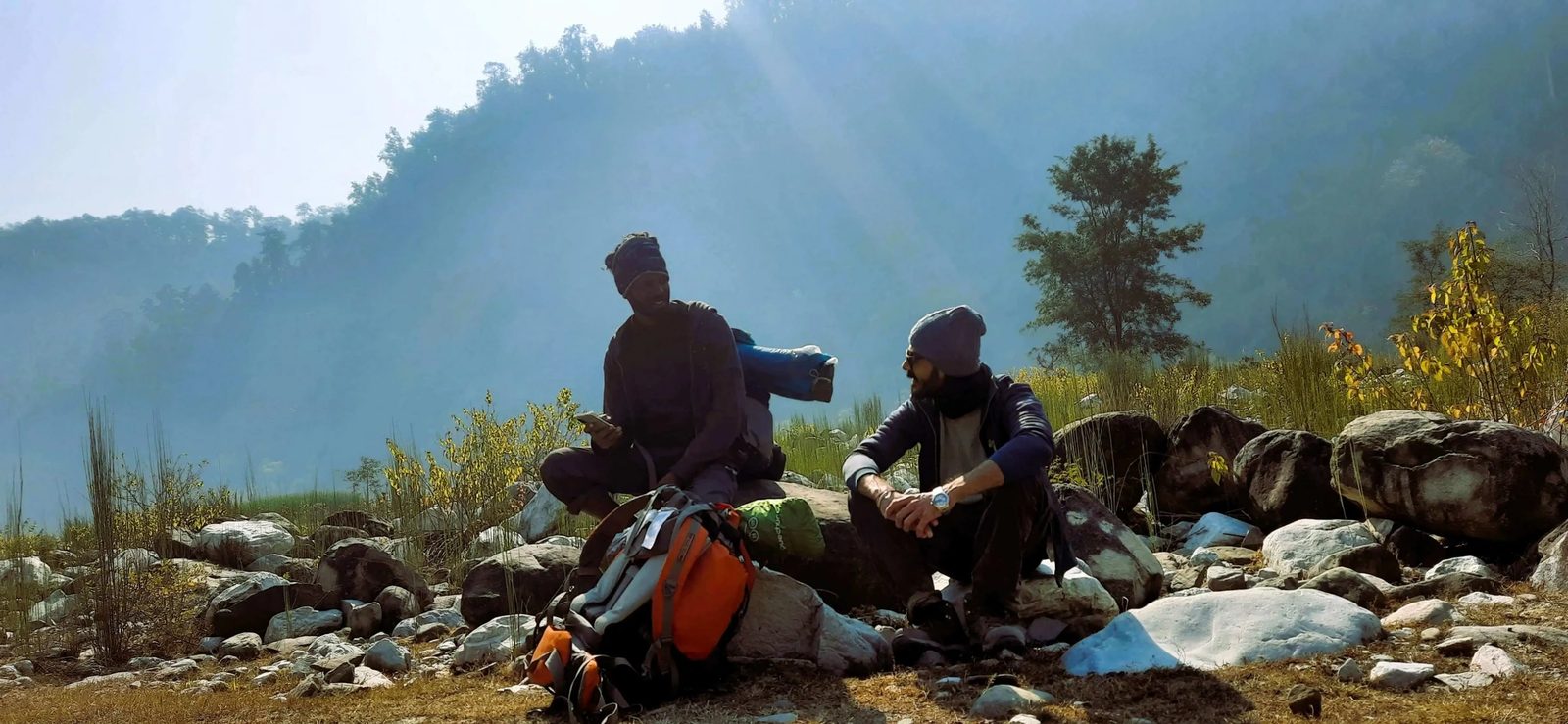
The pattern that emerged is instructive. On the six-day Valley of River expedition in Champawat, travellers trekked seventeen kilometres through the valley and stayed with local families along the way, eating Kumaoni food cooked in their kitchens. Hosting became a source of income and pride in villages such as Lodiyalsera, where residents who had rarely met visitors from the cities welcomed guests from Mumbai and Hyderabad for New Year's Eve.
Travel then opened doors to work that had nothing to do with tourism. In Furkiyajhala, Khirdwari and Lodiyalsera, that meant menstrual health drives in which more than a hundred sanitary pads were distributed alongside honest conversation. It meant books and study material reaching more than five hundred students in government schools. It meant solar panels that brought a school's computers back to life after nine years without power to run them, and beekeeping boxes that gave families honey worth selling at the market.
The lesson is not that every trek should come with a solar panel. It is that travel, done slowly and respectfully, builds the relationships through which everything else becomes possible.
What travellers can do differently
- Stay longer in fewer places. Depth is lighter on a landscape than distance.
- Choose homestays and locally owned stays over chains, so your money remains in the valley you slept in.
- Eat what is grown and cooked locally. A Kumaoni kitchen is a better souvenir than anything in a gift shop.
- Hire local guides. Nobody reads a forest, a river or a trail better than the people who grew up beside it.
- Travel off-season and off-circuit where the ecology allows it, and skip fragile places at their breaking point.
- Ask where your money goes. Operators doing this well are glad to answer.
Where the Foundation goes from here
Planet Trotter Foundation was established to carry this work forward with the structure it deserves: responsible tourism frameworks, conservation programmes and community development designed together rather than in isolation. We are at the beginning of that work. As programmes take shape we will document them here, honestly, including what does not work.
If you are building in this space, as a community organisation, a tourism board, a researcher or a traveller who wants to do better, we would like to hear from you.